Campana Issue #2: AI policy is picking up speed. Don't let the thinking fall behind.
THE PREP PERIODQuick tips, tools & tricks you can take to the classroom on Monday This week's tip comes from We Are Teachers | Explicitly Teach Prompting Districts like Columbus City Schools are rolling out policies that give teachers the final call on whether students can use AI in their classrooms. While many educators will appreciate this level of autonomy, having a playbook to lean on helps. If you're still figuring out AI in your own classroom without much guidance, here's a practical place to start: teach your students how to write better prompts. We Are Teachers put together a solid guide on AI prompts for students that's worth bookmarking.
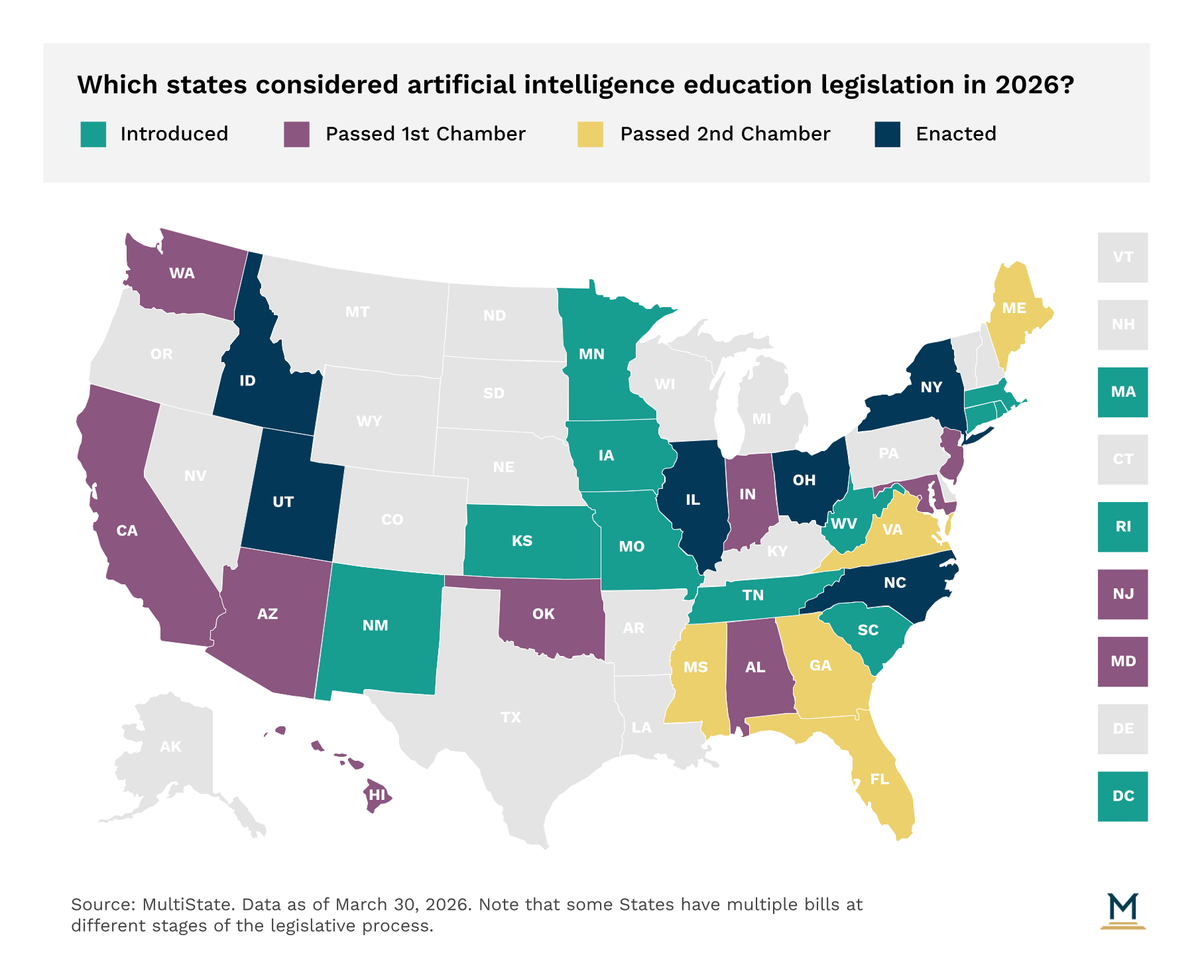
One useful takeaway: have students start with a clear action word (like "compare", "generate", or "analyze"), and then say exactly what they want. Instead of “tell me about the water cycle,” they learn to say "explain the water cycle to a 4th grader using simple words, and give two real-life examples of where we see it." That shift puts more of the thinking back on the student, which is the whole point. This week, try introducing one prompt structure with your class. See what they do with it. LOUNGE READSThis week Boston launched a city-wide AI literacy push for every high schooler, Idaho signed AI literacy standards into law, and Google rolled out new educator certifications. The through-line is that teachers are increasingly being asked to lead on AI, sometimes with support, sometimes without it. WGBH News Boston launches push to teach every high school grad to use AI critically Boston's making AI literacy a graduation requirement - here's what that actually looks like in practice. KREM 2 Idaho governor signs law establishing AI literacy standards for K-12 schools Idaho just made AI literacy a legal requirement for K-12 - your state may be next. Google Blog Google launches new AI literacy tools and educator certifications Free Google certifications for teachers in AI literacy just dropped - worth bookmarking before summer PD planning. SARAH'S PICKThe AI Journal The AI Journal puts language to something teachers already know in their bones: the skills that matter in the age of AI are the ones they're already teaching. By now you've probably seen the clip of the First Lady pitching "Plato," a robot teacher who would deliver personalized lessons in your living room. It made for a great meme, but it also revealed something important: the people shaping AI policy for education still think the problem is content delivery. This framework from The AI Journal caught my attention because it pushes back on that assumption. The authors argue that AI is getting really good at the stuff we used to test for: recall, procedures, right answers. What it doesn't do so well is judge, interpret, prioritize, or put information in context. U.S. education, they point out, is in many ways still anchored to a 20th-century model built around the first category, not the second. The real gap is in teaching students how to think through information, not how to receive more of it. What struck me here is that good teachers have always done this. Every time you push a student past the right answer and into the why, you're doing the work this framework describes. UNESCO's framework stresses that AI must support teachers, not replace them, and that human judgment has to stay central. The question is whether the people making policy decisions will catch up to what's already happening in classrooms. One thing I'm pretty confident about: that work will always require an educator in the room, not a robot on a red carpet. A NOTE BEFORE YOU GO...I'm glad you're here! If something resonated this week, hit reply and tell me. If you know a fellow educator who would find this useful, forward it their way. The village grows when educators share with other educators. |
Aldeya AI
The weekly AI newsletter for educators, by an educator.
THE PREP PERIOD Quick tips, tools & tricks you can take to the classroom on Monday Create an automated “of the day” suggestion | This week's tip comes from Aldeya Keep a fresh daily touchpoint in your classroom without increasing your daily workload. Instead of spending your prep period coming up with a new question on your own every day, prompt AI to generate a ready-to-use suggestion. Once you're happy with the output, you can set yourself up with suggestions and starting points for the...
THE PREP PERIOD Quick tips, tools & tricks you can take to the classroom on Monday Avoiding "Companionship Risk" | This week's tip draws from the Raspberry Pi Foundation and the AI for Education webinar on anthropomorphism The language we use around AI shapes the mental models students build about what it actually is. When adults say "ChatGPT thinks," "the AI wants to help," or "he understood what I meant," students get a picture of AI that doesn't match reality. And for younger students...
Happy Friday, Reader! Welcome to issue #1 of Campana. I started this newsletter because I believe AI should happen with educators, not to them. The people who know students and pedagogy best are the ones who should be shaping how AI enters the classroom - and that starts with being informed. Written by someone who has actually stood in front of a classroom, Campana aims to keep educators up to date and provide them with quick tips, tools, and tricks that they can actually use on the ground....